For Woodworkers Who Refuse to Settle: Understanding the Funahiro Legacy
There's a particular kind of woodworker who reaches a point where Western tools simply stop satisfying them. Maybe they've tried a decent Japanese plane from a hardware import store, felt that whisper-thin shaving curl off the surface, and realized there's a whole other level waiting. The Funahiro hand plane exists at that level. Made by one of Japan's most respected blacksmithing traditions, this is a tool that demands skill, rewards patience, and represents exactly what the Japanese woodworking market means when it talks about craft over convenience.
Japanese planes — known as kanna — work on a pull stroke rather than a push, which fundamentally changes how wood reads under the blade. Getting familiar with that dynamic is step one. But with a master blacksmith instrument like the Funahiro, step two is realizing that the steel itself behaves differently than anything mass-produced.
What You Get
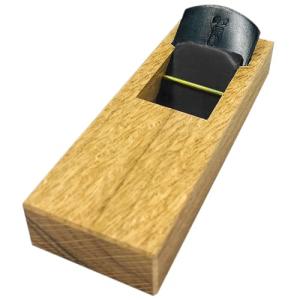
The Funahiro is a traditional Japanese smoothing plane built around a laminated blade — high-carbon white steel or blue steel at the cutting edge, bonded to a softer iron body. This construction is the whole point. The hard steel takes an edge that borders on surgical. We're talking about steel that can be sharpened to a degree that most Western plane blades simply can't match in terms of keenness or edge retention.
The wooden body — the dai — is typically crafted from Japanese white or red oak, fitted and tuned to work with the blade's geometry. It isn't just a handle. The dai is a precision instrument in itself, and on a Funahiro plane, the fit between blade and body reflects the kind of attention to tolerance that you simply don't find in production tools. The chip breaker is properly tuned, the mouth is tight, and the sole geometry is consistent.
The body width on this plane places it in classic smoothing plane territory — wide enough to cover meaningful surface area per stroke, but manageable enough for detailed work on smaller panels and joints. Setup does require some time. Flattening the sole, seating the blade properly, and learning to tap adjustments with a hammer are all part of the experience. If that sounds tedious, this plane probably isn't the right fit. If it sounds appealing, you already know who you are.
Real-World Performance
Once properly tuned and set, the Funahiro produces shavings that look like tissue paper and surfaces that need no sandpaper. That's not hyperbole — that's the legitimate output of well-hardened Japanese steel on a dense hardwood like cherry or walnut. End grain work becomes surprisingly manageable. The blade holds its edge through extended sessions in a way that softer Western steel genuinely doesn't.
There are real demands here, though. The blade requires dedicated Japanese waterstones to sharpen correctly. Using inferior abrasives on this grade of steel is counterproductive. The dai will also require occasional maintenance — minor adjustments for humidity changes, especially if you're not working in a climate-controlled shop. This is true of all wooden-bodied planes, but worth knowing upfront.
The learning curve is real. Plan for a period of adjustment if you're coming from metal-bodied bench planes. But once that adjustment happens, the feedback through the tool — the feel of the cut, the sound, the control — is something that experienced woodworkers consistently describe as a revelation.
Who Should Buy This?
- Intermediate to advanced woodworkers who have outgrown production-grade Japanese planes and want genuine blacksmith-quality steel
- Furniture makers who prioritize hand-planed surfaces over sanded finishes
- Traditional Japanese woodworking practitioners who already understand kanna setup and maintenance
- Collectors and enthusiasts who value the cultural and craft heritage behind named blacksmith tools
- Western woodworkers who have already built sharpening skills on waterstones and are ready to explore Japanese plane technique seriously
A Funahiro plane is an investment in a tradition that goes back generations. It isn't a beginner's tool, and it doesn't pretend to be. But for the right woodworker — someone who sharpens carefully, works deliberately, and cares deeply about the quality of a finished surface — it's the kind of tool that stays in the shop for decades and gets better with every tuning.
Check current price and availability on eBay
Related brands: Suizan | Unknown | Jayger | Ranshou
Browse more japanese woodworking tools listings: View on eBay