Why Japanese Woodworking Tools Will Change How You Think About Cutting Wood
Most Western woodworkers pick up a Japanese tool for the first time and immediately notice something feels different. The feedback is cleaner. The cut is quieter. There's a precision that's hard to describe until you've experienced it. These tools aren't just aesthetically distinct — they're built on fundamentally different engineering principles, and understanding those principles is what separates a frustrating first experience from a genuinely transformative one.
Understanding the Pull-Stroke Difference
The single most important thing to grasp is that Japanese saws, planes, and many chisels are designed to cut on the pull stroke rather than the push stroke. This isn't a quirk — it's intentional engineering. Pulling creates tension in the blade, which allows the steel to be made thinner and harder without buckling. Thinner blades mean narrower kerfs. Harder steel holds a finer edge longer.
In practical terms, a Japanese ryoba saw — the double-sided general-purpose saw with rip teeth on one edge and crosscut teeth on the other — can feel almost effortless compared to a Western panel saw. The kerf on a quality ryoba is often around 0.5mm. You're removing less material and expending less energy with every stroke. For joinery work, especially dovetails and mortise-and-tenon cuts, this matters enormously.
New users often make the mistake of forcing the tool. Don't. Let the geometry do the work. Light grip, light pressure, consistent angle. The blade will find its path.
Starting With the Right Saw for the Job
If you're buying your first Japanese saw, avoid the temptation to start with a specialty tool. A ryoba is the sensible starting point — it handles most tasks and teaches you how pull-stroke cutting actually feels. From there, a dozuki makes sense for precise joinery. The dozuki has a stiffening spine along the back, similar to a Western tenon saw, which limits depth of cut but provides exceptional control for fine work.
For dedicated ripping along the grain — breaking down boards, for instance — a kataba rip saw is worth having. It has no back spine, allowing deeper cuts, and the aggressive rip geometry makes fast work of softwoods and domestic hardwoods alike.
Most entry-level Japanese saws use disposable blades rather than requiring sharpening. This is actually ideal for beginners. You get consistent sharpness without needing to learn the specialist skill of setting and filing Japanese saw teeth, which is genuinely difficult and requires dedicated tools.
Japanese Planes and Chisels: A Different Setup Process
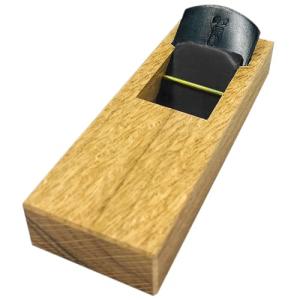
Kanna, the Japanese hand plane, operates in reverse to a Western bench plane. The blade bevel faces up and the plane body is pulled toward you. The blade is set by tapping it forward with a hammer and adjusted back by tapping the rear of the body. It sounds fiddly until it becomes muscle memory.
What makes Japanese planes exceptional is the hollow back — called the ura — ground into the flat face of the blade. This hollow reduces the surface area that needs lapping flat, which means sharpening is faster and more precise. When you flatten the back of a kanna blade, you're only working the perimeter and edge. This is clever design, not decoration.
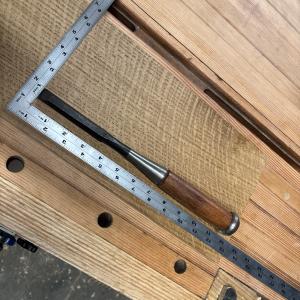
Japanese chisels, or nomi, have the same hollow back principle. The laminated construction — hard high-carbon steel forge-welded to a softer iron body — means the cutting edge holds sharpness exceptionally well but is also easier to sharpen than a monosteeled chisel. The trade-off is fragility. Don't use them to pry, lever, or do anything other than pare and chop.
Sharpening Is Non-Negotiable
Japanese tools are typically sold sharp but not necessarily sharpened to their full potential. Learning to use waterstones — progressing through grits from around 1000 up to 6000 or 8000 — will unlock what these blades are actually capable of. The hollow back makes the process faster than most people expect. A properly sharpened Japanese chisel should leave end grain feeling almost polished.
The real reward of working with Japanese woodworking tools is cumulative. The more you use them, the more your eye and hand calibrate to their feedback. Cuts become more deliberate, surfaces cleaner, joinery tighter. They reward patience and attentiveness in ways that make the craft feel genuinely worth pursuing.
Ready to shop? Browse a wide selection of japanese woodworking tools on eBay: View current listings